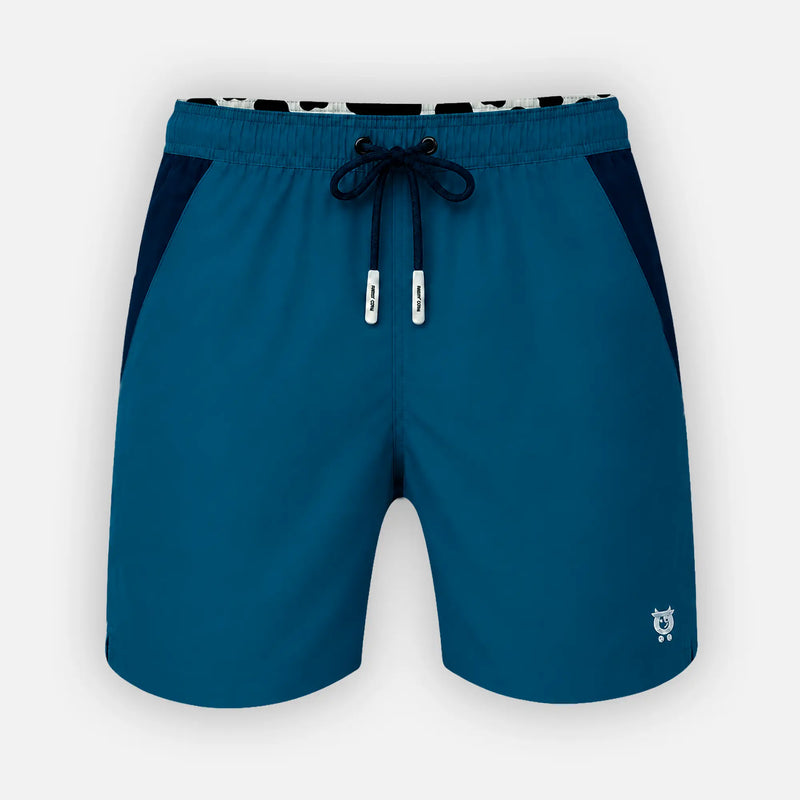
Why Do Swim Shorts Have A Mesh Lining?

It's one of those questions that occurs to most men at some point — usually somewhere around hour three of a beach day when the inner thighs have started to register a complaint. Why exactly do swim shorts have that scratchy net inside? And more importantly, does it actually need to be there?
The honest answer is: mesh lining exists for historical reasons that made sense fifty years ago and have been largely perpetuated by habit ever since. Here's the full story.
The Original Purpose of Mesh Lining in Swim Shorts
Mesh lining in swimwear dates back to the 1970s. When men's swim shorts became a mainstream product, manufacturers needed a cheap, quick solution to provide three things: basic modesty when wet fabric became transparent, light support during physical activity, and a barrier between the outer fabric and the skin.
Mesh — a loose woven netting — ticked all three boxes at minimal cost. It was quick to produce, easy to attach at the waistband, and added almost nothing to the manufacturing price. It became the industry standard almost by default rather than because it was the best solution available.
For decades, every swim short manufacturer simply followed the same template. Mesh lining became so normalised that most men never questioned it — they just accepted the discomfort as part of wearing swim shorts.
So Why Is Mesh Lining a Problem?
The issue with mesh lining isn't the concept — it's the execution and the material. Loose woven netting is fundamentally abrasive, particularly when wet. Salt water makes it worse. Chlorine makes it worse. Heat makes it worse. And the longer you wear it, the more opportunity the mesh has to rub against the skin repeatedly.
The inner thigh is particularly vulnerable because the mesh moves independently of the outer fabric. Every step creates a small amount of friction. Multiply that by thousands of steps across a beach day and you understand why so many men end the day walking like they've crossed a desert.
Men with larger or more muscular thighs feel this most acutely — more thigh contact means more mesh contact means more friction. But it affects anyone who spends a full day in traditional mesh-lined shorts.
The other problem is drying. Mesh lining dries significantly slower than modern performance fabrics — it traps moisture and stays damp long after the outer shorts have dried. That prolonged dampness against the skin is its own source of discomfort.
Should You Cut the Mesh Out?
A lot of men try this. And it partly works — removing the mesh eliminates the friction. But it creates new problems. Without any lining, the outer fabric can cling to the body when wet, provide no support during swimming, and potentially become more transparent when soaked. Cutting mesh out is a workaround for a design flaw rather than a solution to it.
The better question isn't whether to cut the mesh out. It's whether mesh should have been there in the first place.

Why Randy Cow Removed the Mesh Entirely
When Randy Cow was designing its swim shorts, the decision to remove mesh lining wasn't a gimmick or a marketing angle. It came from a simple question: what actually solves the problems mesh was designed to solve, without the downsides?
The answer was a built-in compression liner. Made from the same premium 90% recycled polyester performance fabric as the outer short, the compression liner is cut to fit closely against the body. It provides genuine light support, moves with you rather than independently of you, dries at the same rate as the outer fabric, and creates zero friction points.
It does everything mesh was supposed to do — better. Without any of the irritation.
The result is swim shorts that are genuinely comfortable for a full day of wear. Not comfortable for the first hour. All day.
Mesh Lining vs Compression Liner — The Key Differences
| Mesh Lining | Randy Cow Compression Liner | |
|---|---|---|
| Material | Loose woven netting | Premium recycled performance fabric |
| Fit | Loose, moves independently | Close-fitting, moves with the body |
| Friction | High — especially when wet | None |
| Drying time | Slow | Same as outer fabric |
| Support | Minimal | Light compression support |
| Comfort | Degrades through the day | Consistent all-day |
Do All Randy Cow Swim Shorts Have No Mesh?
Yes — every pair of new Randy Cow no mesh swim shorts across the entire range is completely mesh-free. From bold patterned designs to plain colours, waterproof pocket styles to matching father and son sets — all of them use the compression liner construction. No exceptions.
If you've spent years accepting the discomfort of traditional mesh-lined swim shorts, the difference is noticeable from the first wear.